Tips for Logging Food Faster and More Accurately
August 25, 2026
Most people don't quit food tracking because they lack willpower. They quit because logging feels like a chore, or because the numbers stop matching reality and the whole thing starts to feel pointless. Both problems have the same fix: log smarter, not harder.
Here's what actually moves the needle.
Log before you eat, not after
This is the single biggest accuracy upgrade available to you. Log after a meal and you're reconstructing it from memory — guessing portion sizes, forgetting the tablespoon of oil, rounding the handful of chips you grabbed off someone else's plate. Log before or during the meal and you're describing what's actually in front of you.
It also removes the biggest reason people abandon tracking mid-day: the mental backlog. If you wait until evening to log three meals and two snacks, you're not tracking anymore — you're doing homework. A quick photo or barcode scan in the moment takes less time than typing a description later ever will.
Match the method to the moment
One of the most common ways people make tracking harder than it needs to be is using the same input method for everything. Different foods call for different tools:
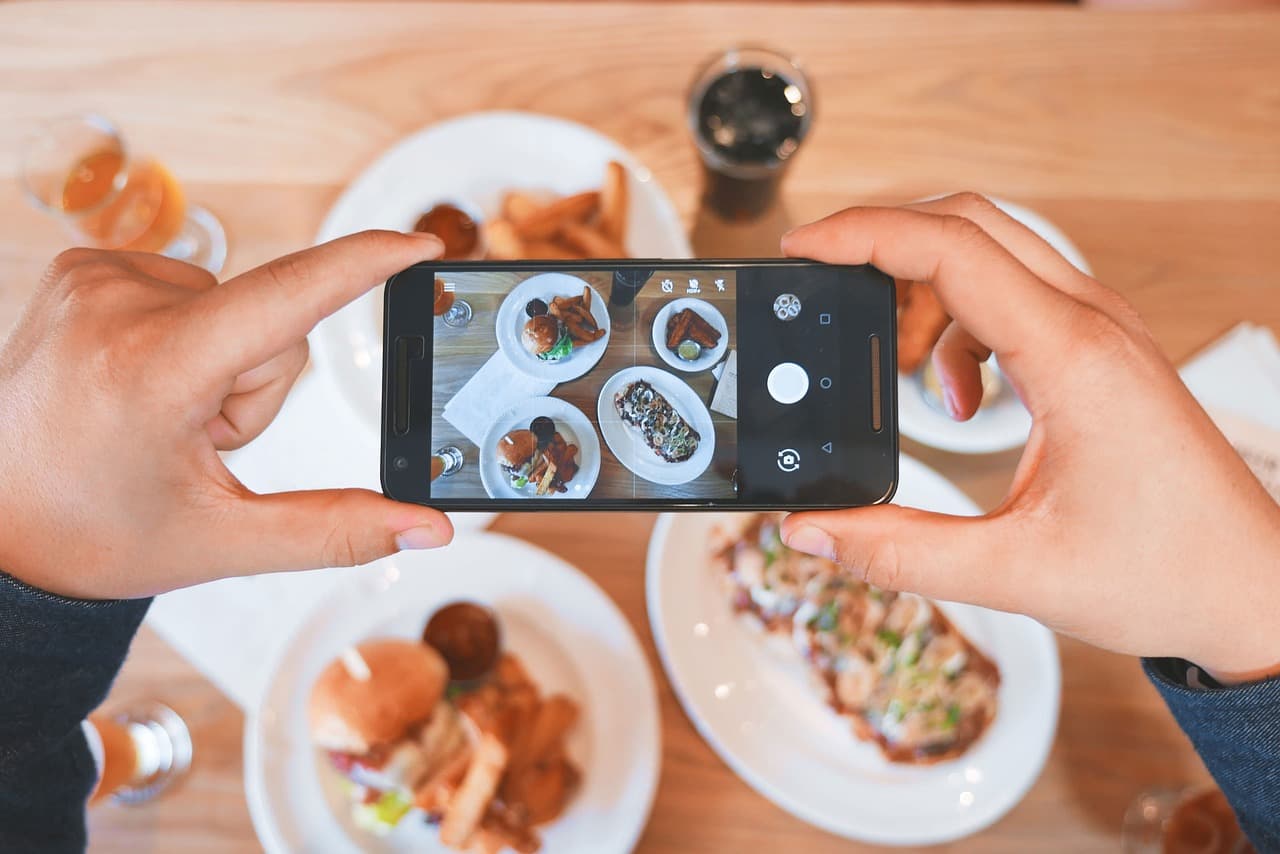
- Homemade or restaurant plates — snap a photo. This is the fastest option when a meal has multiple components (protein, starch, veg, sauce) because you're not manually itemizing each one.
- Packaged food — scan the barcode. It's more precise than eyeballing a photo of a granola bar, and it's faster than searching by name.
- Eating out at a chain or café — check if it's on a menu listing before you snap a photo or type it in. Restaurant items are often already logged with verified nutrition info, which beats any estimate.
- Hands full, driving, or mid-cooking — use voice. Saying "two eggs, one slice of toast, black coffee" takes five seconds and means you won't forget to log it once your hands are free.
- Something specific or unusual — type it in as text. Sometimes a quick description is genuinely faster than fumbling for the camera, especially for simple, single-ingredient foods.
The point isn't to master one method — it's to stop forcing photo logging on a protein bar or text logging on a stir-fry with eight ingredients. Use whichever is fastest for what's on your plate.
Build a shortcut list for your regulars
Most people eat a rotating set of maybe 15-20 meals. Same breakfast on weekdays, same protein shake, same order at the lunch spot near work. Logging these from scratch every time is wasted effort.
Save your frequent meals once, with accurate portions, and reuse them. This does two things: it cuts logging time down to a couple of taps, and it means the accuracy work only has to happen once per meal instead of every single time you eat it. If you tweak a saved meal slightly — extra rice, no dressing — adjust that one entry instead of building it from zero.
Don't let the small stuff disappear
Accuracy usually breaks down in the extras, not the entrées. The cooking oil, the salad dressing, the butter on toast, the sugar in your coffee, the sauce on the side — these are calorie-dense and easy to skip because they don't feel like "food." A tablespoon of olive oil is roughly 120 calories, and it's the first thing people forget to log because it never touches a plate on its own.
A few ways to catch this:
- Log condiments and oils as separate entries rather than trying to mentally fold them into the main dish — it's easier to estimate a tablespoon of dressing on its own than to guess how much a whole "salad" adds up to.
- Measure your pour a few times. Most people have no idea what a real tablespoon of oil looks like coming out of a bottle. Do it with a spoon two or three times and you'll calibrate your eye for good.
- Photograph food before sauce gets mixed in, if you're using photo logging — it's easier for the estimate (and for you) to identify what's underneath.
Fix estimates instead of skipping them
AI-based estimates, whether from a photo or a quick description, get you close fast — but "close" isn't always exact, and that's fine. The habit that matters isn't getting every entry perfect on the first try; it's glancing at the estimate and nudging it if something looks off, rather than shrugging and moving on, or worse, not logging at all because you're not sure it's precise. A rough log you actually did beats a perfect log that only exists in your head.
Set a trigger, not a time
"I'll log at the end of the day" is a plan that fails constantly, because by 9pm you're tired and can't remember what you had for lunch. A better approach is tying logging to something that already happens: log when you sit down to eat, when you finish making coffee, when you unwrap a snack. Attaching it to an existing action removes the need to remember at all.
None of this requires more discipline than you already have — it just requires using the right tool for each bite instead of forcing every meal through the same slow process. Get the method right for the moment, catch the extras, and fix rather than skip the estimates that are a little off. That's most of what accurate tracking actually is.